
Start with local play, bot matches or a private lobby
Just Volleyball beginner starting point
Begin by reaching the ball and sending a controlled touch toward a teammate. A useful receive creates time for the rest of the rally. Winning the first match is a less helpful practice goal than repeating that action.
Use the tutorial, local play or a private lobby with friends. The routine below is a suggested practice sequence you can repeat at your own pace.
Move first, then make contact
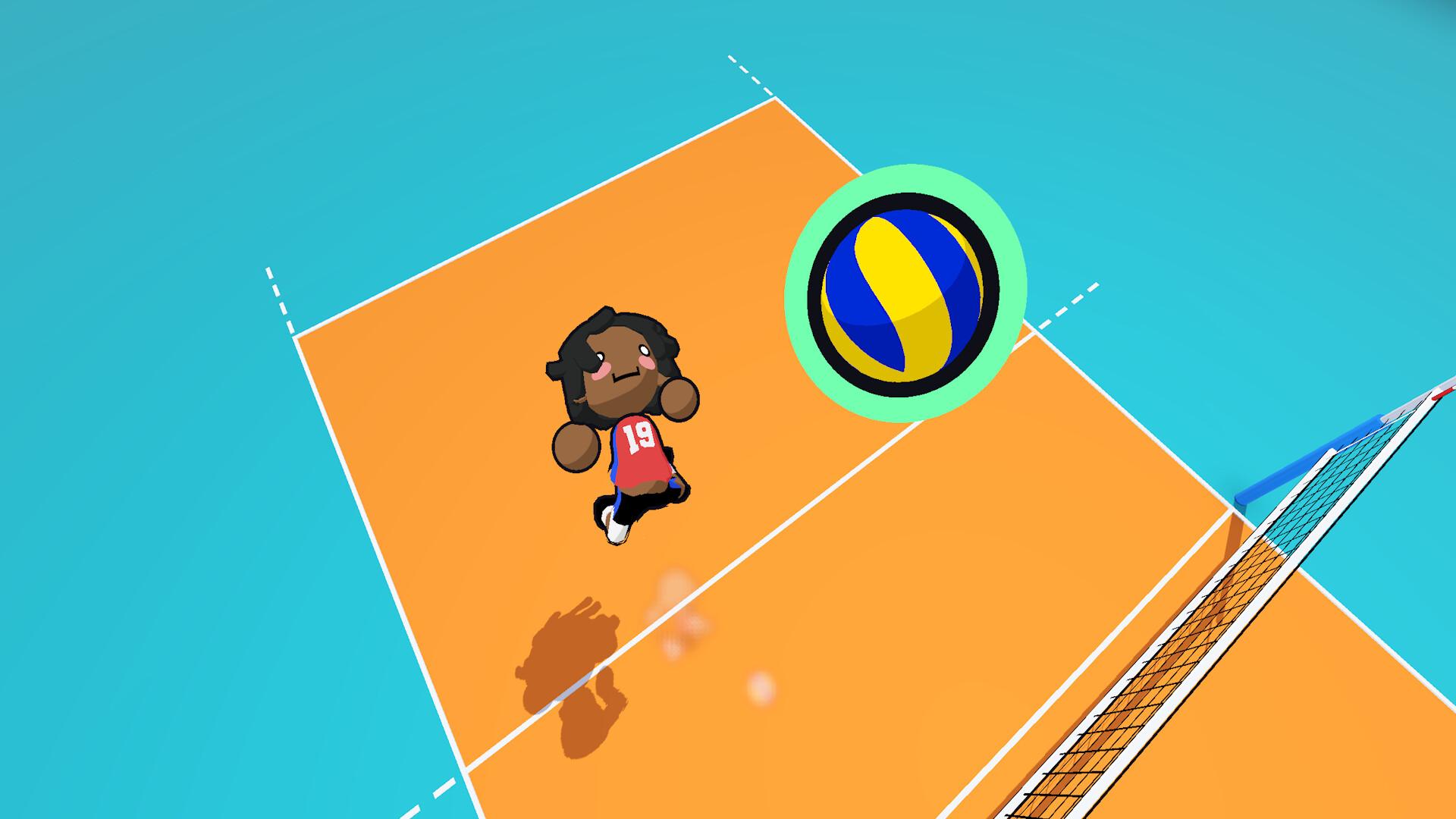
Movement brings your player into reach; the mouse chooses the outgoing target. Watch the landing indicator and move early. During a serve, sprint into the ball’s path instead of standing still and repeatedly pressing receive.
Aim toward a teammate who can make the next touch. After passing, return to useful coverage rather than chasing the ball into another player’s space.
Receive, set and attack
A normal team rally allows up to three touches, with blocks excluded from that count in the default rules. Start with a receive, make a set that gives the attacker time, then send the ball across. In 1v1, the same player can perform the sequence.
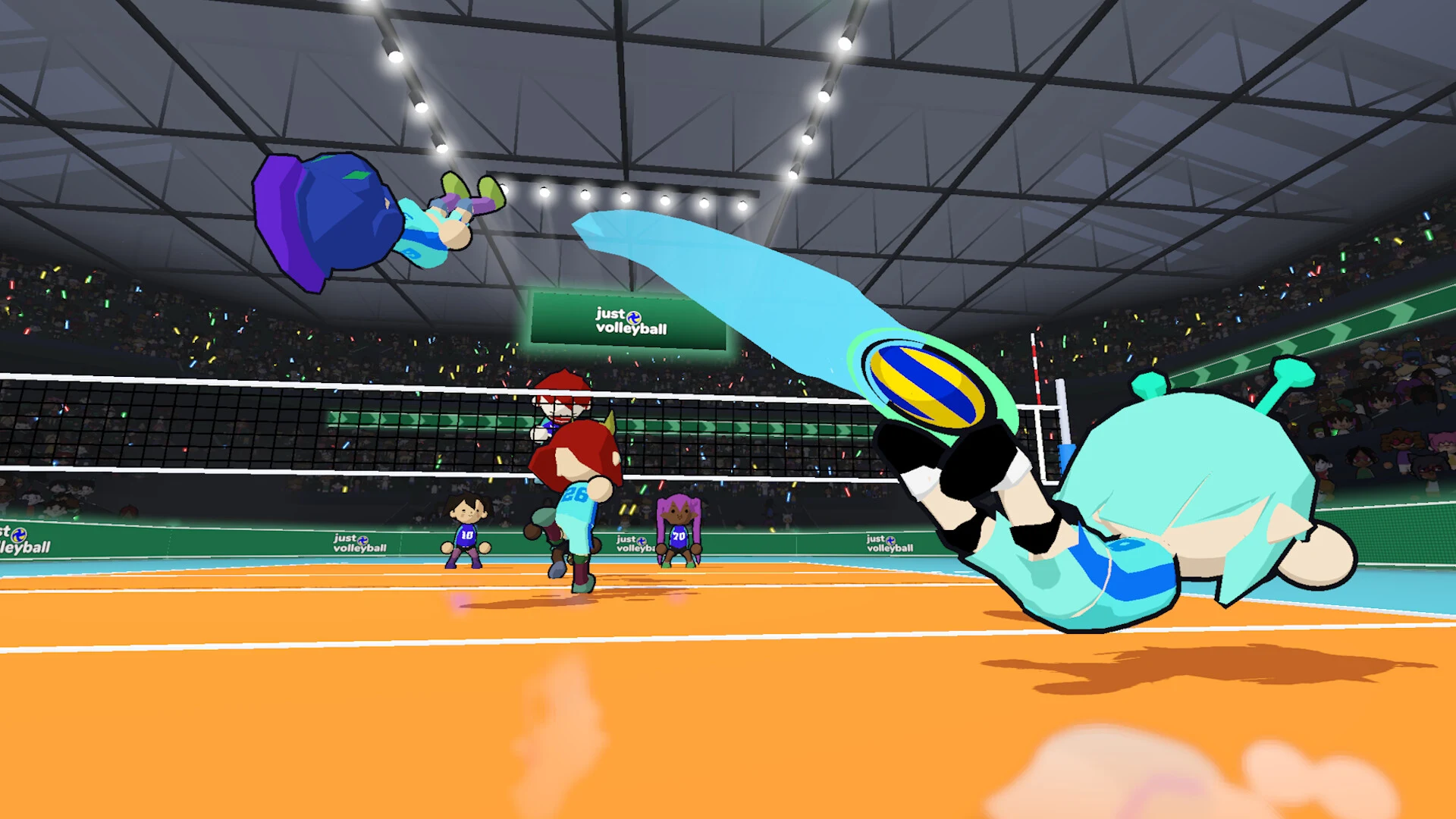
Approach an attack before the set arrives. Try to be airborne as the ball passes above you and contact it near the top of your jump. First aim for a repeatable contact, then work on placement.
Start rallies with a reliable serve
Use the active serving prompts and aim for a large area inside the opposing court. A playable serve creates more practice opportunities than an advanced attempt that repeatedly ends the point.
Change one part of the serve at a time. Keep the target similar while adjusting timing. Add difficult placement or float and spin variations after the basic sequence becomes consistent.
Dive, block and cover deliberately
Walk or sprint into a routine receive when possible. Diving uses stamina and a mistimed dive can disrupt teammates. Save it for a ball that needs the extra reach.
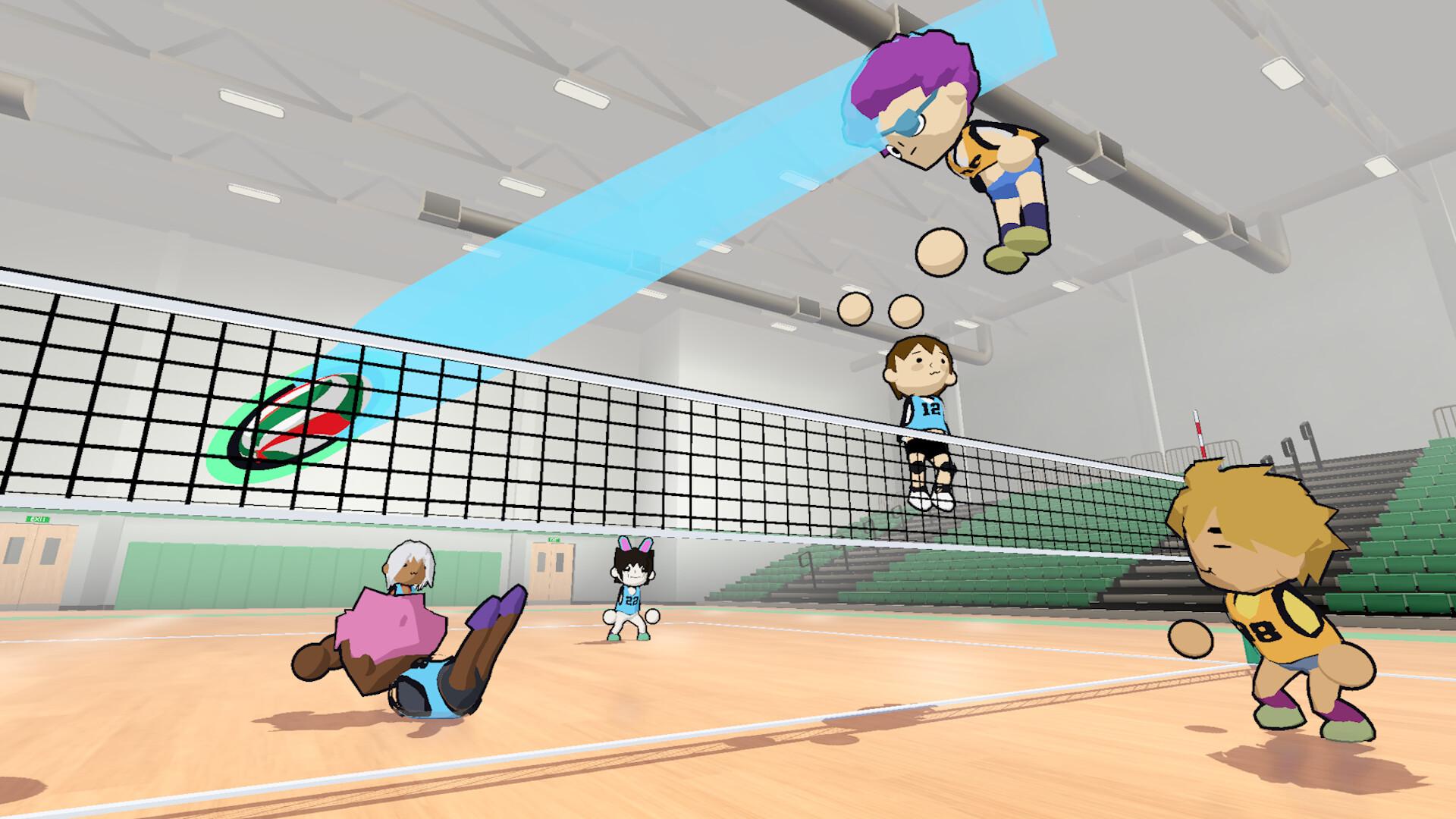
At the net, watch the attacker before committing to a block. Players behind the block should cover the remaining court. If every teammate moves forward to attack, the backline is left open.
A practical first-session routine
Choose a single goal for each short practice session. Repeat the earlier step if a match exposes a weakness.
- Move around the court and learn the landing indicator without attempting difficult shots.
- Receive several balls toward the same teammate.
- Trade controlled sets and attacks in a small lobby.
- Play a bot match while keeping players spread across the court.
- Review an available replay and choose one positioning or timing change for the next session.
Joining public games
Try public play once you can identify your controls, return a routine ball and leave space for teammates. Small formats make individual contacts easier to follow; larger teams need more disciplined coverage.
Use server descriptions to find a suitable session. Measure progress through cleaner first touches, fewer panic dives and longer rallies across comparable matches. Return to private practice when the pace feels too fast.
Practice block — receiving under a little pressure
Once a stationary receive feels comfortable, add movement before contact. Begin slightly away from the anticipated landing area, then move into place and aim at your teammate. Repeat from both sides so you learn to receive after moving in either direction.
Use a small batch of attempts and notice why each one fails. Were you late to the ball, aiming at an awkward target, or diving when a step would have worked? Change the part that caused the miss before increasing the speed. These are suggested practice checks, rather than hidden game requirements.
The receiver’s job continues after the pass. Recover into space that lets you cover the next touch. Following your own pass all the way to the setter can remove the room they need to create an attack.
Practice block — build a hittable set
Choose one attacker and one approach area for a short exercise. Receive toward the setter, make the set and let the attacker approach without chasing the ball at the last moment. Keep the same target for several repetitions to make differences easier to notice.
If the hitter arrives late, move the approach earlier before changing the set. If the ball lands behind the hitter, adjust the target and repeat. If both players change timing and target on every attempt, it becomes difficult to identify which change helped.
Swap roles after a few rallies. Receiving a teammate’s set gives you a clearer sense of the time and space a hitter needs. It also helps both players develop a simple call for who takes the first and second contacts.
- Agree who receives, who sets and where the attacker approaches.
- Repeat the same target at a comfortable pace.
- Adjust one timing or placement choice after a failed attempt.
- Swap roles and compare which sets are easiest to attack.
Choose a target before the attack
As the set develops, look at the defenders and the block. Decide where you want the attack to go before you make contact. This reduces the temptation to aim hurriedly while also trying to jump and hit.
In early practice, choose a broad open area and focus on staying in the rally. A playable return gives you another chance to receive and set. Once contact becomes consistent, try placing attacks toward different areas and watch how the defense responds.
After hitting, get ready for the ball to return. An attack that is blocked or defended is still part of the same rally. A teammate who covers behind you can turn a difficult rebound into another organized attempt.
Track improvement with a simple practice log
Compare similar sessions. A clean receive in a quiet bot game and a desperate save in a crowded public match measure different things. Keep the format and goal similar for a few sessions before deciding whether a change helped.
A short note is enough: what you practiced, the mistake you noticed and the adjustment to try next time. Reviewing every point can be overwhelming. Pick one rally that shows the issue clearly, then repeat the relevant movement in practice.
Move to a larger team format when you can recognize your coverage area and communicate who takes a shared ball. More players add options, but also more chances for two people to chase the same contact. Keep the same habit of making space for the next teammate.
| Skill | What to observe | Next adjustment |
|---|---|---|
| Receive | Can the teammate use your pass? | Move earlier and prepare the cursor target. |
| Set | Can the attacker follow a repeatable approach? | Keep a consistent target while adjusting timing. |
| Attack | Do you select a landing area before contact? | Choose a broad target before jumping. |
| Coverage | Is someone ready after a block or defended hit? | Recover into space after your touch. |
| Teamwork | Do players collide or leave the middle untouched? | Agree on a simple call and responsibility. |
Frequently asked questions
What should I learn first?
Move into range and aim a controlled receive toward a teammate.
Do I have to start in 6v6?
No. Use bots, local play or a smaller private format while learning.
How do I measure progress?
Look for more usable receives, fewer positioning errors and longer rallies.